
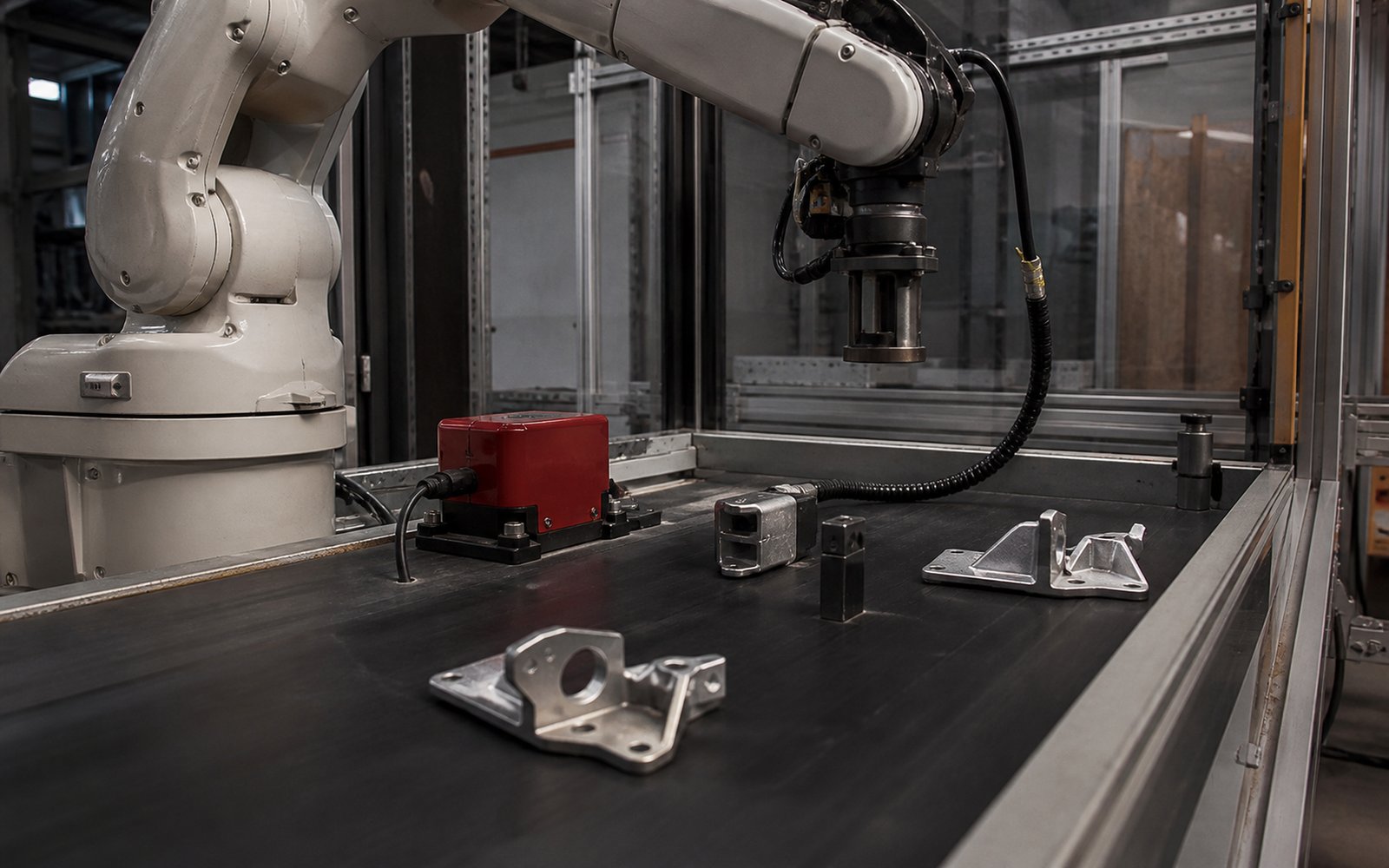
Anyone can label the easy frames. The hard ones decide the model.
YPAI settles the taxonomy, the edge-case rules and the review method before production, so occlusion, thin boundaries, tiny parts and dense instances are labelled the same way in every frame.
- Occlusion how much of the object must be visible to count
- Thin boundary where the edge sits when the contrast does not
- Tiny object the size below which an instance is out of scope
- Dense instances when touching objects are one label or many
Drawing the shape is the easy half. Deciding what counts is the work.
Two annotators can draw the same object and still disagree. What separates them is not skill, it is whether the guideline already answered the question:
A drawn shape
- geometry
- a class name
A decided label
- what counts as the object at all
- where the boundary sits when contrast fails
- how much occlusion still earns a label
- whether a truncated instance is kept or dropped
- when touching objects are one instance or many
- the size below which an instance is out of scope
- whether a deviation is a defect or in tolerance
- which attributes travel with the instance
- what an annotator does when the frame is ambiguous
- who adjudicates, and what the record shows
YPAI settles these questions in the guideline before production, not in review afterwards.
The same holds for industrial vision: a surface mark becomes useful training data only when the guideline states the product, station, process stage, tolerance, viewpoint and inspection method that decide whether it is a defect at all.
The taxonomy is built around the decision the system must make.
That decision may be:
- which object to manipulate
- which instance to act on
- whether an assembly is correct
- whether a surface contains a defect
- whether the system should continue, stop, retry or escalate
The ontology, capture protocol, annotation and acceptance plan follow that decision.
Start with the data bottleneck.
YPAI can run one defined stage or the complete data operation.
-
Entry point: Write the guideline
Start here when: Two annotators would answer the same frame differently.
Typical output A written guideline with worked examples, a frozen class list and the rules that resolve disagreement.
-
Entry point: Label a defined set
Start here when: You have frames and an agreed acceptance criterion.
Typical output Labelled frames with per-instance attributes, reviewer records, agreement results and acceptance status.
-
Entry point: Re-label existing data
Start here when: You have labels you cannot trust or cannot use across training and evaluation.
Typical output A re-labelled set against the current taxonomy, with the disagreements found and how each was resolved.
-
Entry point: Run the annotation operation
Start here when: You need the work to keep running against a moving taxonomy.
Typical output A controlled labelling, review and acceptance workflow connected to your model-development environment.
Edge cases
The edge is part of the task.
A model trained on clean frames meets the other kind in production. These four decide the guideline, and the guideline decides whether two annotators agree.


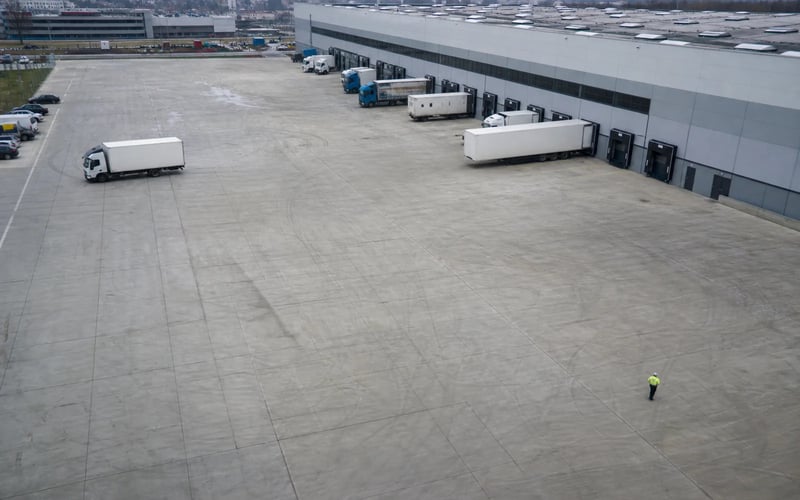
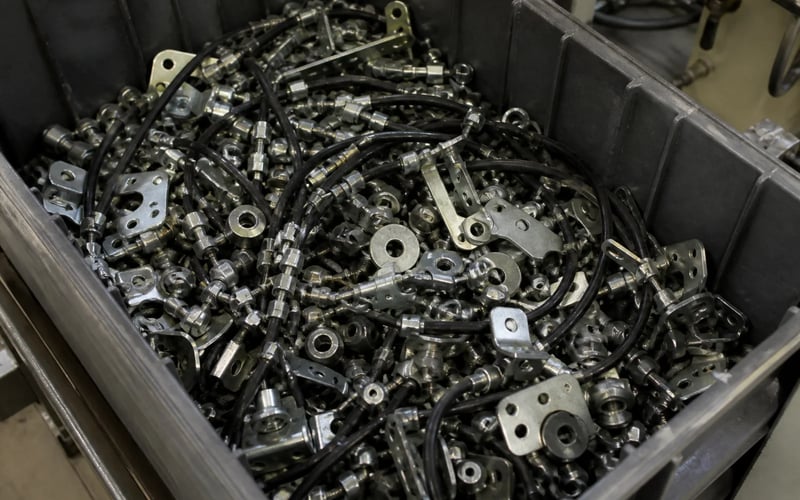
Each one is settled in writing before production, with a worked example, so the answer is the same in frame one and frame forty thousand.
Every class should say what it excludes.
The exact taxonomy is written for the customer's product, station, model task and acceptance criteria.
An annotation taxonomy can carry the following layers.
Representative taxonomy
- Class definition
-
- what the class is
- what it excludes
- near-miss classes
- worked examples
- known confusions
- Geometry
-
- label type per class
- box, polygon, mask or keypoints
- minimum instance size
- vertex budget
- precision tolerance
- Boundary rules
-
- where the edge sits
- behaviour when contrast fails
- shadow and reflection
- specular and transparent surfaces
- motion blur
- Occlusion and truncation
-
- visibility threshold
- frame-edge rule
- partial instance handling
- occluder recorded
- amodal or visible extent
- Instance separation
-
- touching objects
- stacked objects
- group versus instance
- instance identity across frames
- split and merge rules
- Attributes
-
- per-instance attributes
- permitted values
- when an attribute is required
- null and unknown
- attribute conflicts
- Defect criteria
-
- product and station
- process stage
- tolerance band
- severity levels
- in-tolerance deviations
- Ambiguity and escalation
-
- what the annotator does when unsure
- flag reason
- escalation path
- who adjudicates
- how the ruling propagates
- Review and acceptance
-
- sampling method
- agreement measure
- reviewer record
- rework trigger
- acceptance status
The taxonomy is frozen before production scale.
A class list is not a taxonomy. The rules that resolve disagreement are.

The taxonomy has to
survive contact with
a real frame.
Every layer above is carried per instance. A guideline that reads well and cannot be applied to this frame is not finished.
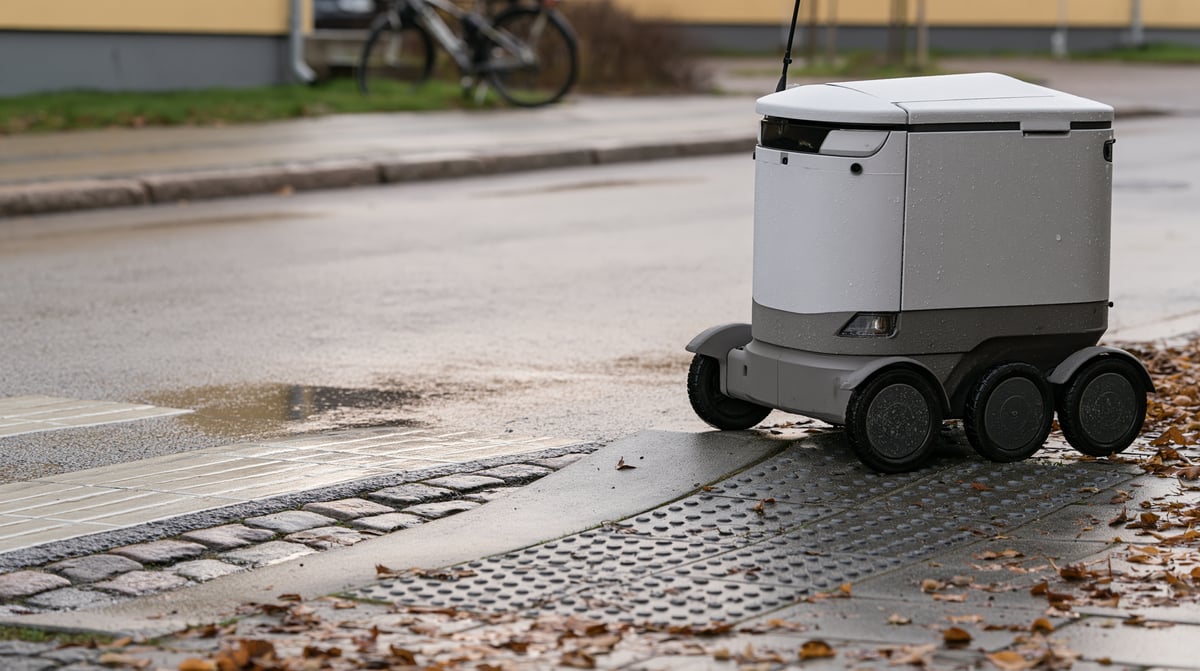
The output format is
a model decision.
Each label type preserves something different and costs something different. The model task decides which one is right, not annotator preference.
- Classification
- Box
- Polygon
- Mask
- Keypoints
Keypoints and pose sit beyond the ladder: they preserve articulation rather than extent, and they are chosen when the model must act on the object, not only find it.
Industrial vision data should represent the decision on the line.
A defect label without process context may not be enough to train or evaluate the system that must act on it. The same surface mark is a defect at one station and in tolerance at the next.


The delivered label set records not only the class and the geometry, but the capture conditions under which the inspection decision was made, so a disagreement can be traced to the frame rather than to the annotator.
Real data grounds the system.
Synthetic data expands the coverage.
Rare classes and rare conditions are the ones a real capture rarely contains. Synthetic frames arrive pre-labelled, and they pass the same guideline, review and acceptance process as the real ones.
 Real baseline Synthetic coverage
 - Baseline label set
- Class and condition gaps
- Generate
- Check plausibility
- Evaluate against real frames
- Close the loop
Synthetic frames are a coverage tool, not a substitute for acceptance on real ones.
Quality follows the complete label set.
The quality process begins with the guideline, not with review, and ends only when the label-set version is accepted.
Where accuracy or pass rate is the appropriate metric, YPAI typically proposes a 95% to 99% target range after calibration, with the exact metric, threshold and review method defined in the SOW.
Ships with the accepted version / class list & taxonomy · annotation guideline with worked examples · reviewer and adjudication record · agreement report · quality report · provenance & rights record · label-set version record · checksums
Delivered in or mapped to COCO, YOLO, Pascal VOC, KITTI, Parquet, JSONL or a customer-native schema. Format support is confirmed against the actual data, loader, toolchain and delivery requirement.
Different systems need different data operations. Robot foundation model · manipulation and humanoid · industrial inspection · sensor and device · existing-data recovery.
Send the images, the classes and the acceptance criteria.
The system, the task, the data source, the sensors, the scale, the annotation and the delivery format. YPAI returns feasibility, method, schema, QA and acceptance, delivery format and the open decisions before launch.
Related
- Robotics at YPAI Collection, task demonstrations and held-out ground truth for robots on every ground.
- Data collection Custom video, image, sensor and multimodal collection.
- Video annotation Temporal events, tracking and action labels.
- LiDAR and 3D Point-cloud annotation and spatial data.
- Sensor fusion Synchronized multimodal annotation.
- Image annotation Detection, segmentation and keypoints.
- Managed annotation Ontology, production, review and acceptance.
- Pilots Validate the task, output and acceptance plan before scale.